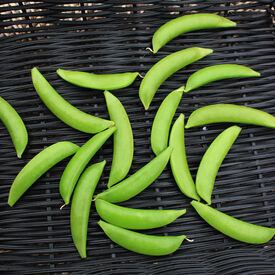
Little SnapPea Crunch is perfect for smaller gardens or container growing! These pea plants are compact yet very productive. Little SnapPea Crunch produces crunchy, sweet, juicy, edible pod peas in about 58-60 days. These peas do well as the weather warms and pea shoots, mature in 13 days and displays very short internodes. Leaves are great as a garnish or as a stand-alone salad green.
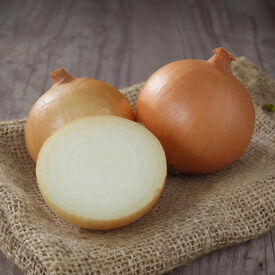
Texas Early Grano onion is a renowned heirloom variety with a rich history and impressive growing characteristics. Originating from the fertile soils of Texas, this onion has been cultivated since the early 20th century and is celebrated for its adaptability and early harvest. The Texas Early Grano onion is characterized by its round, yellow bulbs with a smooth, thin skin and crisp, white flesh. Known for its mild, sweet flavor, it is particularly favored for fresh use in salads, salsas, and cooking. The onions generally reach maturity in about 100 to 110 days, and the plants exhibit a robust, upright growth habit, growing to heights of 12 to 18 inches with a spread of about 6 to 8 inches. They thrive in well-drained, fertile soil and prefer full sun exposure. Texas Early Grano onions are notable for their early harvest, which allows gardeners to enjoy fresh onions earlier in the season compared to other varieties. Their reliable growth, mild flavor, and adaptability make them a popular choice for both home gardeners and commercial growers.
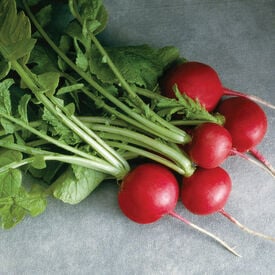
Crunchy Red produces large tops and very uniform dark red, round roots. This variety is very slow to develop pith. It performs well under cool conditions. It’s usually a few days earlier than standard varieties. Crunchy Red is desirable where larger roots are required.
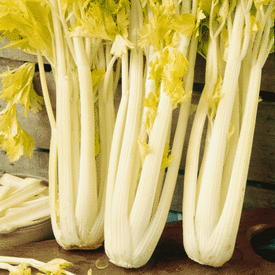
The Golden Pascal celery stalks grow to be 18-20 in. tall. This celery blanches easily to a beautiful golden-yellow. Both the stem & heart of the Golden Pascal are very tender, very delicious and free from string.
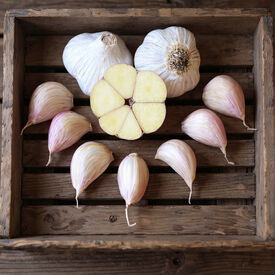
Music garlic is a "Garlic Lovers" garlic! This garlic variety is prized for it's mild flavor and ease of peeling. Its flavor is well developed without any bitterness, and it does not disappear when cooked. Just one clove can add so much flavor to any recipe, so it is time-saving! This variety keeps well until April or May when stored properly. Most bulbs average 4-5 cloves.
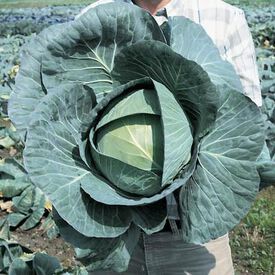
Great field cabbage performance. A rugged hybrid that produces well in Southern winters and Northern summers. Produces large, blue-green heads with cream colored inside. Uniform cabbage that works great for markets.
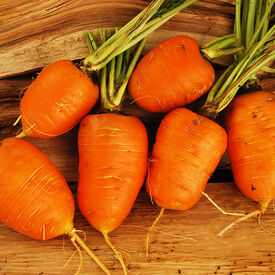
The Oxheart Carrot is a small variety weighing just only 1 pound and is named for its unique short shape resembling a heart. This carrot might be tiny, but its crisp, sweet flavor is mighty making it the perfect juicing carrot! This variety is very adaptable and thrives in either heavy or shallow soils. Oxheart will store very well and can be frozen to add to soups and strews!
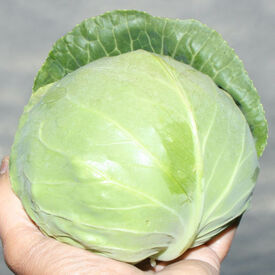
Katarina cabbage has a perfect smaller head size (4”) and shape to be grown successfully in containers on patios, decks or in-ground beds, possibly as an ornamental/edible border.
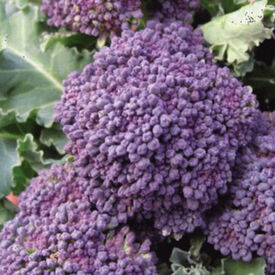
The Early Purple Sprouting broccoli is an heirloom broccoli bred for overwintering! This variety produces lots of beautiful purple broccoli sprouts in the spring. The Early Purple Sprouting grows slowly through the winter; very frost hardy.
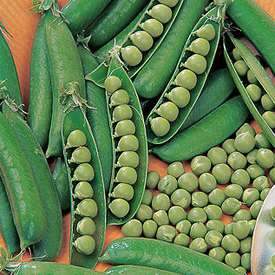
The Spring Pea is the sweetest pea pod you can grow in the garden! This variety is a very early maturing medium sized pea plant that produces super sweet peas. Spring bears large crops of pods that hold 6 to 7 plump peas that are delicious in soups and stews.
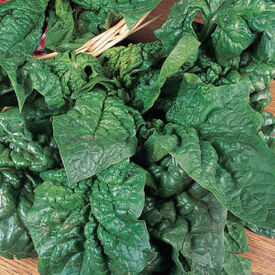
The Noble Giant is an old heirloom that was an All-America Selections Winner in 1933. This spinach variety produces huge, dark green leaves with a very delicious flavor. This spinach is great in salads, cooked, canned or frozen. The Noble Giant is slow to bolt and is very easy to grow, making it perfect the perfect spinach for the home gardener!
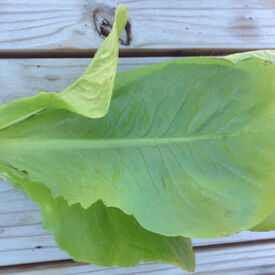
The Winter Density Lettuce is a favorite cold weather Romaine! This variety produces compact, extra-dark green heads that are 8" tall and very tightly folded. The Winter Density gets its name for doing well in the cold weather!
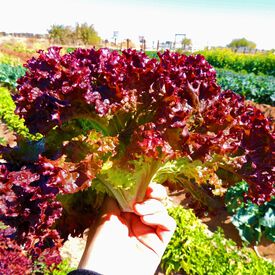
The Selway is a Lolla Rossa type lettuce with beautiful light green and dark purple coloring. This variety has deeply curled loose leaves with frilled dark-purple edges edges. The Selway is an essential in salad mixes for its color and taste. For baby leaf production, this variety can be harvested in 30 days and for full sized leaves, it can be harvested in 55 days and can be cut repeatedly!
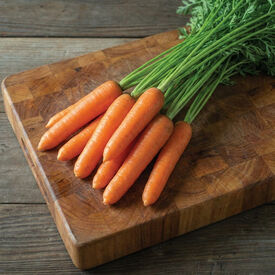
The Kuroda Shin is a popular Oriental carrot with a nice sweet flavor. This variety is a great addition to any Oriental dish. The Kuroda Shin carrot's deep orange, stubby roots are mild and sweet. This is an excellent carrot for juicing as well. Grows well in many climate conditions, good for home or market.
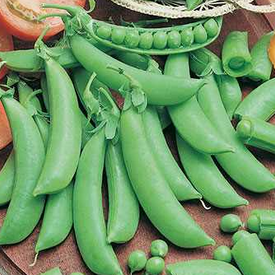
Cascadia Pea is a major garden staple for its heavy yields of great tasting and crispy pea pods. Enjoy bucketloads of large, crisp pods with small, sugary peas! The 3' tall vines should be supported on a trellis or fence. Cascadia's multiple disease resistances allow for spring and late season plantings.
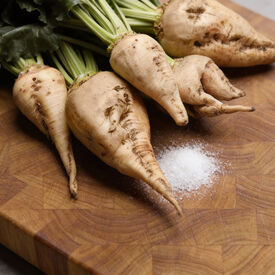
Sugar beets are the perfect natural choice to make sugar! You can boil the sugar beets in order to make a sugary syrup. These beets can grow up to 1 foot long and can weigh from 3-5 pounds. That means you need to thin them to make sure they have enough room to grow. Tops can grow 1-2' tall. Beet tops can be eaten, lightly grazed or fed to animals.
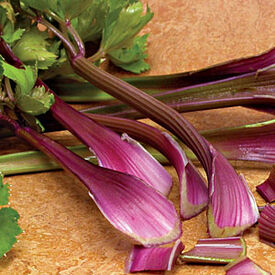
The large, red stalks of the Giant Red celery have a wonder flavor, some prefer it over green stalks! The Giant Red celery is a hidden gem. This variety is by far the best tasting celery you can grow! The yellow-pink hearts of the Giant Red are great in salads or soup and it grows great throughout the United States.
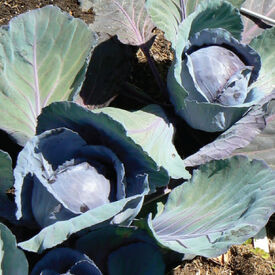
An early cabbage with a blue-green color. Produces beautiful globe-shaped heads that have a blueish color. Very good holding ability. 3-5 lb. heads produced on low, compact plants. First introduced by Harris Moran.
